
It looks like a model, it’s a team: AI’s multi-agent turn

🔗 Learn more about me, my work and how to stay in touch: maeste.it: personal bio, projects and social links.
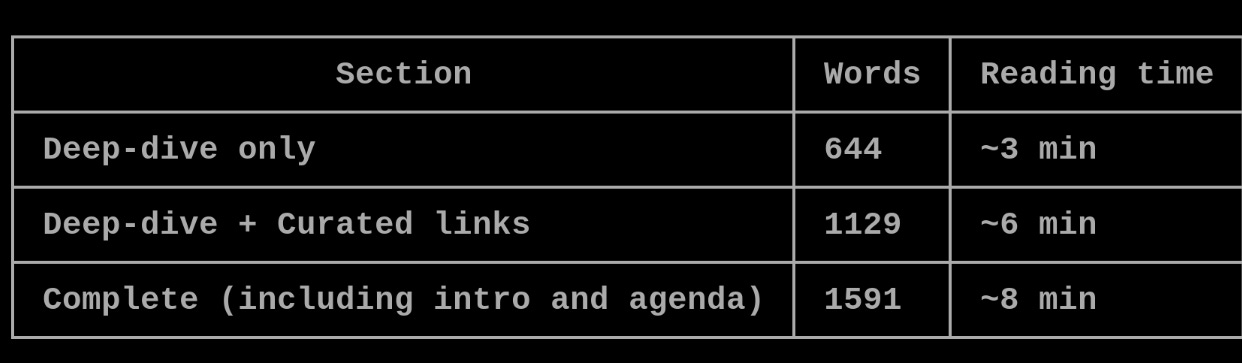
This is the week I come back to an idea I’ve been chasing for years, ever since two years ago I was trying it out with a PoC called wise-agents: getting multiple small, specialized models to work together instead of handing everything to a single giant brain. Back then it was too early, today I find it everywhere. In the deep dive I line up the milestones, from Karpathy’s council to OpenRouter’s Fusion Router, all the way to Sakana Fugu, which presents itself as a model but underneath is a multi-agent system. My thesis is that the unit of measure has shifted from the single model to the team and whoever directs it, and that with a good multi-model harness much of those results are already within our reach. Not by chance Simone Basso, in the interview you’ll find in the agenda, puts it better than I do: the model is a commodity, the harness is the asset. In the links section, the surrounding themes: the White House slowing down GPT-5.6 (and here the frontier held hostage by politics comes back), Liquid AI’s on-device little model, OpenAI’s Jalapeño chip, computer use on Gemini Flash, fine-tuning MoEs with NVIDIA, Apple’s price hikes on RAM, and Mercury 2 generating a thousand tokens per second. Enjoy the read.
My agenda
New interview with Simone Basso (CTPO WeRoad): why “the model is a commodity, the harness is the asset” and how they actually apply it at European scale. Inside, also the 150 AI licenses given to the whole company (not just the devs) and the real ROI of coding agents, Anthropic’s 8x seen by someone who measures it.
On Saturday “Physical AI: VLA vs World Model” came out: with Vittorio from Cyberwave we figured out why you build a software agent in two hours and a physical one in two years. Listen here.
Our projects Lince.sh and AntiVocale (Google Play, GitHub), you know them well by now. Take a look also at Agent ready skills, which I talked about on June 24 at AIConf.
On my own:
On June 24 I was in Milan as a speaker at AIConf. Thanks to everyone who attended and gave me feedback on my talk. You can find the slides, the feedback form and all the links here, and I’ll soon add the video of the talk as well.
On Tuesday the 30th at 8pm I’ll do a live on X and YouTube with Ivan Fioravanti. Topic: personal agents, Hermes and GBrain. Follow along... there might be some surprises.
Multi-model and multi-agent systems: two years ago it was too early, now we’re here
Two years ago I was getting my hands on a PoC called wise-agents. The idea I was chasing was this: a multi-agent system in which many small models divide the task and orchestrate among themselves to solve complex problems, instead of handing everything to a single giant model. It worked in fits and starts, and it was clearly too early, the models of the time couldn’t keep up. But the intuition, two years on, I now find everywhere.
The first to make it popular, months ago, was Karpathy with llm-council: you ask a question, the whole council answers, each model reads the others’ anonymized answers and ranks them by quality, and a chairman synthesizes the final answer. Anonymized on purpose, so no model roots for its own brand. He himself says he won’t support it (”code is ephemeral now”), but the toy caught on, and from there a fair number of implementations have sprung up, more or less professional.
Then OpenRouter came along to bring it into production with its Fusion Router: up to eight models answer in parallel with web access, a judge compares the answers (compares them, doesn’t merge them: consensus, disagreements, gaps, blind spots) and your model synthesizes. It’s solid, but with a limitation I feel I should point out, it was designed and tested mostly, perhaps only, on deep research. Outside that use case it’s still terrain to explore.
And finally comes Sakana Fugu, which is the most interesting move because it flips the perspective. Fugu presents itself as a model, you use it as if it were a single LLM, but under the hood it’s a multi-agent system: an orchestrator that understands the request, builds the agentic scaffold on the fly and routes the work to a team of specialized models. And the numbers are there, SOTA on SWE-Bench Pro, Terminal Bench, LiveCodeBench, GPQA, even Humanity’s Last Exam. There’s already an open reproduction too, OpenFugu, which defines the heart of the system with a phrase that stuck with me, “a policy over models”, and measures +107% over the best single worker.
The point I want to bring into focus is exactly this. There’s a lot of talk about orchestration, and rightly so, orchestration is the concept that ties together Karpathy, OpenRouter and Fugu. But underneath they’re all multi-agent systems: not a better model, but multiple agents, often different models, that divide the work and reassemble the pieces. It’s a change in the unit of measure: the interesting object is no longer the single model, but the team and whoever directs it.
And here I come back to my fixation, the harness. Because if you think about it, much of this result is possible if you use a good harness, supporting different models and vendors for agents and sub-agents. That’s why lately my attention has shifted to harnesses and to how to have the right context and tools to support advanced, multi-agent workflows and loops with well-defined long-term goals. It’s the orchestration, the scaffolding around the models, that makes the difference, not just the model, especially when the result we measure isn’t that of a chatbot interaction, but a complex task accomplished over hours of work.
Lastly, I’ll stress again that these systems are at their best where the answers are comparable and verifiable. Where there’s a verifier, on code or on math, the judge has something solid to hold on to. On more blurred terrain the gain is there, but it’s less guaranteed. It’s not a flaw, it’s just the perimeter within which it pays off most today.
Two years ago it was too early. Now the idea is mature, the models can keep up, and the question is no longer which model to choose, but how to make them work as a team.
The links that caught my eye this week
The White House asks OpenAI to slow down the release of GPT-5.6
Here I find, almost photocopied, last week’s discussion about Fable and Mythos. The frontier becoming hostage to a political decision, complete with government approval client by client, is no longer an isolated case, it’s a pattern. And every time it happens, my thesis on open weights as an insurance policy gets stronger.
Liquid AI releases LFM2.5-230M
A 230-million-parameter model that its own authors advise against for heavy reasoning, but that flies on instruction following, extraction and tool use. It’s exactly the kind of specialized worker I talked about in the deep dive: not the all-rounder, but the right piece for a precise task inside a multi-agent system, and on-device to boot.
Jalapeño: OpenAI’s new chip
Two things strike me. The first is the complete vertical integration, from products to models down to the silicon: OpenAI wants to control the whole stack. The second, even more interesting, is the tape-out in nine months accelerated by their own models, which leads straight back to the theme of recursive self-improvement. The perf-per-watt numbers, though, I’ll wait for on real silicon.
Computer Use comes to Gemini 3.5 Flash
That computer use is landing in a small, fast model like Flash is already notable, but the part I really watch is another: user confirmation on sensitive actions and an automatic stop in case of prompt injection. It’s the permissions and governance problem I’ve been repeating for months, and the one we work on with Lince. Without those controls, you don’t put long-horizon computer use into production.
Speeding up fine-tuning with NVIDIA NeMo AutoModel
Making MoE fine-tuning accessible with a single import line, and bringing within reach models that were previously out of scale, is the kind of unflashy work that nonetheless feeds everything else. If we really want multi-agent systems with workers fine-tuned specifically for their piece, we need exactly tools like these, that lower the barrier to entry.
Apple raises Mac and iPad prices over the memory chip shortage
Seemingly boring news, but there’s a short circuit that makes me think. Unified RAM is precisely what makes Apple the best machine for local inference, and now it’s the memory chip shortage, driven by AI, pushing prices up. The AI boom makes the hardware you need to bring it home more expensive, a friction on the hybrid future I talk about often.
Inception Labs’ Mercury 2 beats Google’s DiffusionGemma
I’ll close with a model that speaks straight to the deep dive. The headline is speed, a thousand tokens per second thanks to diffusion, but the detail that makes my ears perk up is that it’s explicitly pitched for multi-agent systems. It makes sense: when you multiply the calls between agents, latency adds up, and a worker this fast changes what becomes feasible.